
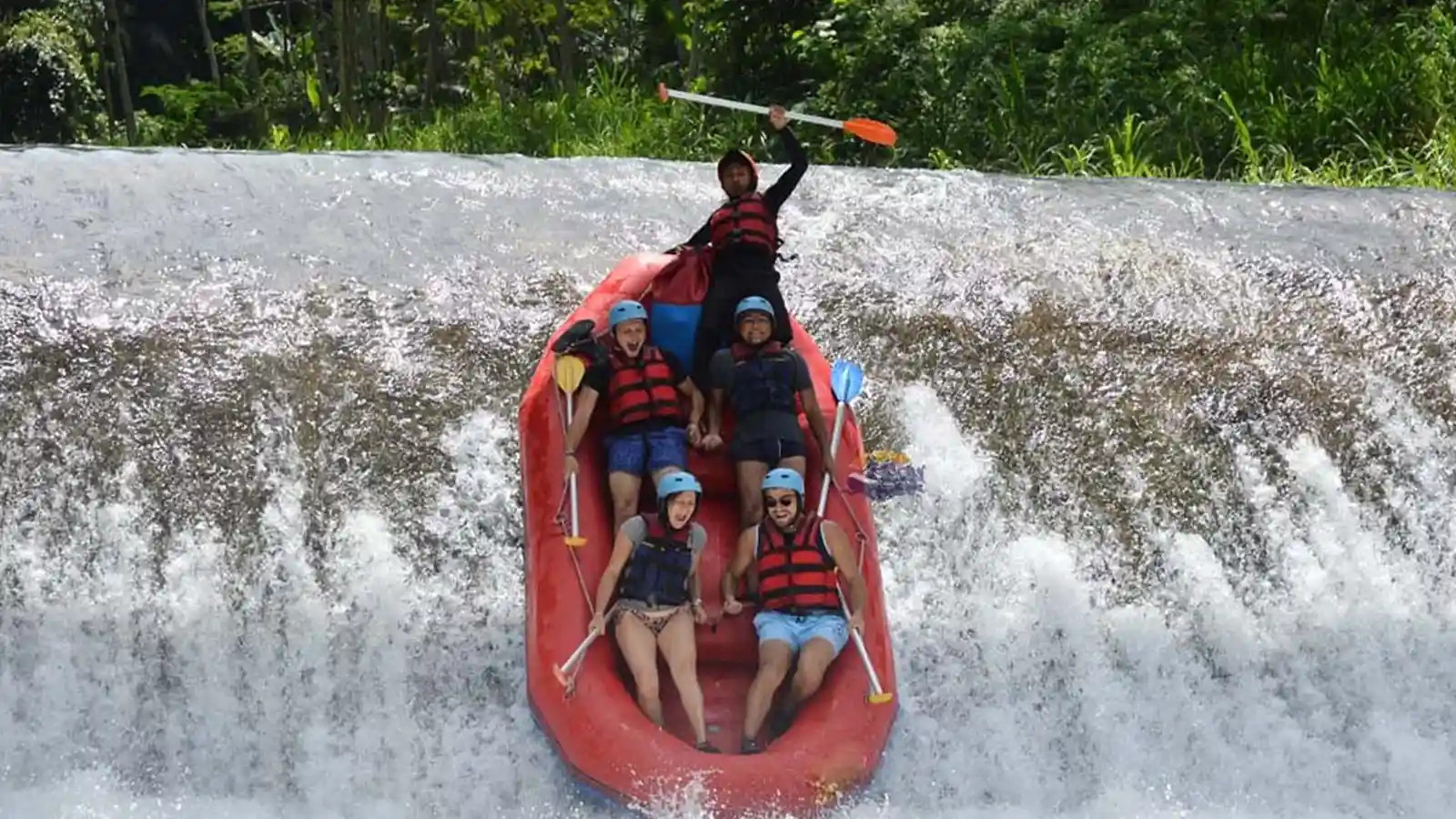
The best place to white water raft in Bali depends on the type of rafting experience you are looking for. For many travelers, the two main choices are Ayung Rafting near Ubud and Telaga Waja Rafting in East Bali.
Ayung River is known for its tropical jungle scenery, waterfalls, river valleys, and convenient location around Ubud. Telaga Waja River offers a longer rafting route through the landscapes of East Bali and is a good choice for travelers looking for a longer and more adventurous experience.
Rather than choosing one river as the absolute best, it is better to compare the two based on location, river distance, duration, scenery, and the type of adventure you prefer.
For most travelers, Ayung Rafting and Telaga Waja Rafting are two of the main options to consider.
The best choice therefore depends on your Bali itinerary and the type of experience you want.
Ayung Rafting is located around Ubud and is a popular option for travelers who want to combine river adventure with Bali’s tropical scenery.
The route covers approximately 12 km and takes around 2 hours on the river.
During the trip, you can enjoy:
The combination of scenery and moderate adventure makes Ayung Rafting a particularly attractive option for families, beginners, couples, and first-time rafters.
For the current route, price, inclusions, and booking information, visit our Ayung Rafting in Ubud, Bali page.
Telaga Waja Rafting is located in Karangasem, East Bali.
The route covers approximately 16 km and takes around 2.5 hours on the river, making it longer than the Ayung route.
The experience includes:
Telaga Waja can be a good choice for adventure seekers, groups of friends, and travelers exploring East Bali.
See our Telaga Waja Rafting in East Bali page for the current package information.
The easiest way to compare the two rivers is to look at the main differences.
| Feature | Ayung Rafting | Telaga Waja Rafting |
|---|---|---|
| Location | Ubud, Bali | Karangasem, East Bali |
| River Distance | Approximately 12 km | Approximately 16 km |
| Duration | Around 2 hours | Around 2.5 hours |
| Scenery | Jungle, waterfalls, river valleys | Tropical landscapes, valleys, rural scenery |
| Experience | Scenic and beginner-friendly | Longer and more adventurous |
| Best For | Beginners, families, couples | Adventure seekers and groups |
| Main Advantage | Convenient for Ubud visitors | Longer river adventure |
For a more detailed comparison, read our Ayung Rafting vs Telaga Waja Rafting guide.
Ayung Rafting is generally the better choice for beginners and first-time rafters.
Its approximately 12 km route and scenic river environment make it a popular choice for travelers who are new to rafting.
Before the activity starts, a professional guide provides a safety briefing and explains the basic paddling commands.
Beginners should always:
For families, Ayung Rafting is generally the more suitable option, particularly for families staying around Ubud.
However, the appropriate choice depends on the age of the children and the current requirements of the rafting operator.
Before booking, check:
Children should also be comfortable around water and able to follow the guide’s instructions.
Telaga Waja Rafting is longer than Ayung Rafting.
Telaga Waja covers approximately 16 km and takes around 2.5 hours on the river.
Ayung Rafting covers approximately 12 km and takes around 2 hours on the river.
If spending more time on the river is important to you, Telaga Waja may be the better choice.
If you are staying in Ubud, Ayung Rafting is generally the more convenient choice because the river is located around the Ubud area.
This can make Ayung a practical option if your Bali itinerary already includes:
You can combine the rafting experience with other activities around Ubud.
If your itinerary focuses on East Bali, Telaga Waja Rafting may be more convenient.
It is located in Karangasem and can be combined with other attractions in the eastern part of Bali.
This makes Telaga Waja a useful option for travelers staying or sightseeing around:
Regardless of which river you choose, you should expect to get wet.
Wear:
Bring a towel and a complete change of dry clothes for after the activity.
The rafting operator provides essential safety equipment such as a helmet and life jacket.
Keep your belongings to a minimum.
Useful items include:
Avoid bringing:
Leave valuables at your accommodation or in the available storage facility before entering the river.
White water rafting is an active outdoor water activity, so participants should always follow the operator’s safety procedures.
Before rafting, your professional guide provides a safety briefing and explains the basic procedures.
Safety equipment can include:
The guide’s instructions should always take priority because river and weather conditions can vary.
Participants should also check the current age and participation requirements before booking.
Package inclusions depend on the selected rafting experience.
Selected packages can include:
Check the current package details before booking because inclusions can vary.
A simple way to decide is to ask yourself these questions.
Choose Ayung Rafting.
Ayung is generally the better starting point.
Ayung is generally the more family-friendly choice, subject to current age requirements.
Choose Telaga Waja Rafting.
Telaga Waja may fit your itinerary better.
Telaga Waja may be the better choice.
There is no single river that is the best for everyone.
Choose Ayung Rafting if you want a scenic rafting adventure around Ubud, approximately 12 km of rafting, around 2 hours on the river, and an experience suitable for many beginners and families.
Choose Telaga Waja Rafting if you want a longer route of approximately 16 km, around 2.5 hours on the river, and a more adventurous experience in East Bali.
Ultimately, the best place to white water raft in Bali is the river that matches your location, travel group, and preferred adventure level.
Ayung River and Telaga Waja River are two popular choices for white water rafting in Bali. Ayung is a good option for scenic rafting near Ubud, while Telaga Waja offers a longer and more adventurous experience in East Bali.
Ayung Rafting is generally the better choice for beginners and first-time rafters. It combines a scenic river experience with approximately 12 km of rafting and around 2 hours on the river.
Telaga Waja Rafting is longer, with approximately 16 km of river distance and around 2.5 hours on the river.
Ayung Rafting is located around Ubud, making it the more convenient choice for travelers staying in the Ubud area.
Telaga Waja can be suitable for first-time rafters who meet the current participation requirements. The experience is longer and more adventurous, so participants should follow the guide’s instructions throughout the activity.
Bring a towel, dry clothes, sunscreen, and any essential personal medication. A waterproof phone case can be useful if you want to take photos.
No. Suitable rafting packages can accommodate first-time rafters. A professional guide provides a safety briefing before the activity.